



EN
✨ Hi, ask me a question!
Assistant
EN
Assistant
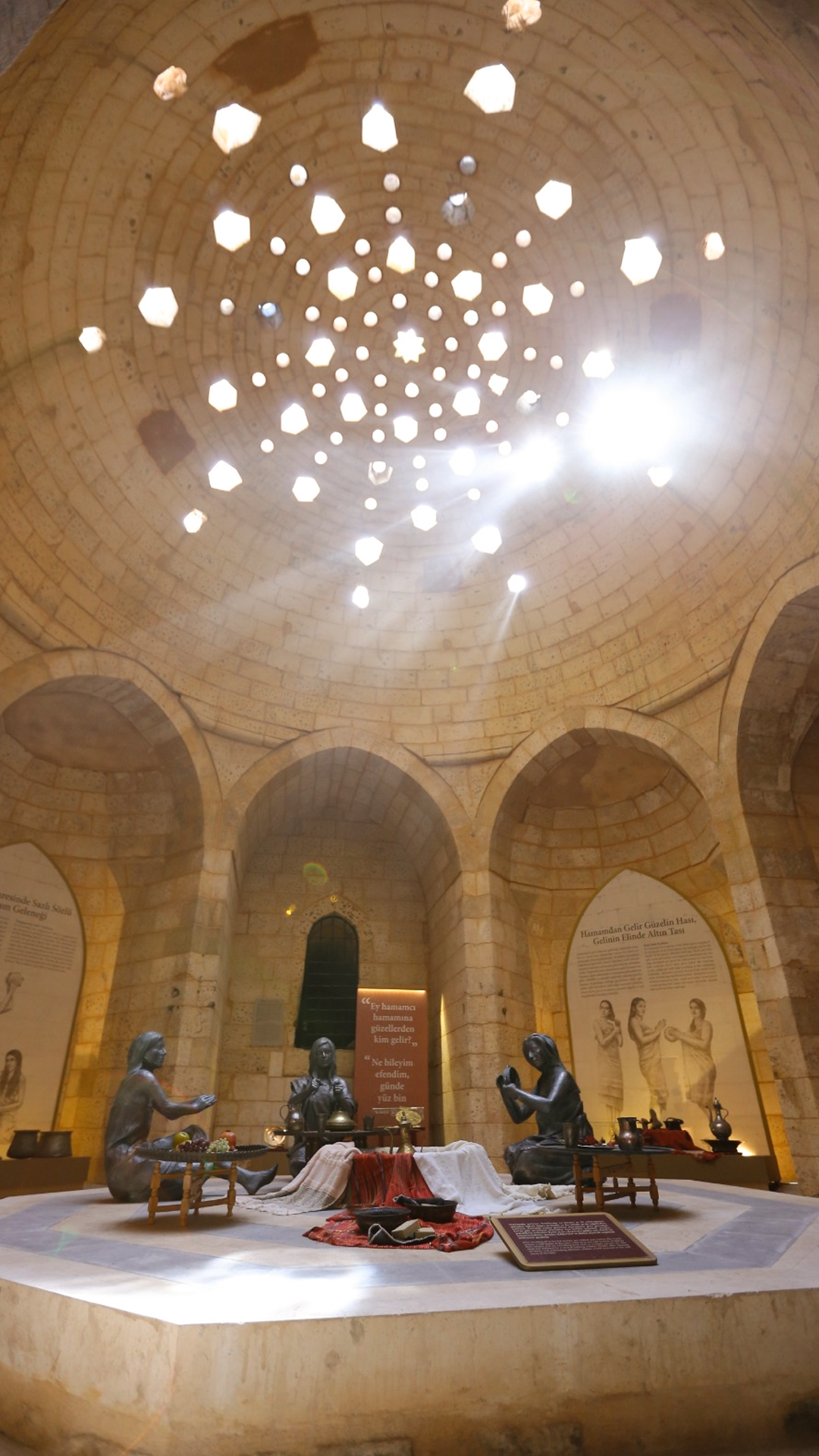
1.6 km
Distance
330 dk
Duration
8
Stops
This route is designed for those who want to explore Gaziantep's rich cultural heritage. The starting point, Bey Mahallesi, allows you to experience traditional life with its narrow stone streets and historic stone houses. Jale Tekinalp Mozaik Sanatları Merkezi is a unique stop to closely observe ancient mosaic art and watch the masters at work.
Millet Hanı, Yeni Hanı, and Gümrük Han offer traces of the trade life during the Ottoman period and take you on a journey through time with their historical stone architecture. Bakircilar Bazaar is an ideal stop to experience craftsmanship and copper art. The day concludes with Kozluca Kasteli and Pişirici Mescidi ve Kasteli; these historical water structures and natural stone architecture provide a deep insight into Gaziantep's past.
1. Day
1. Day
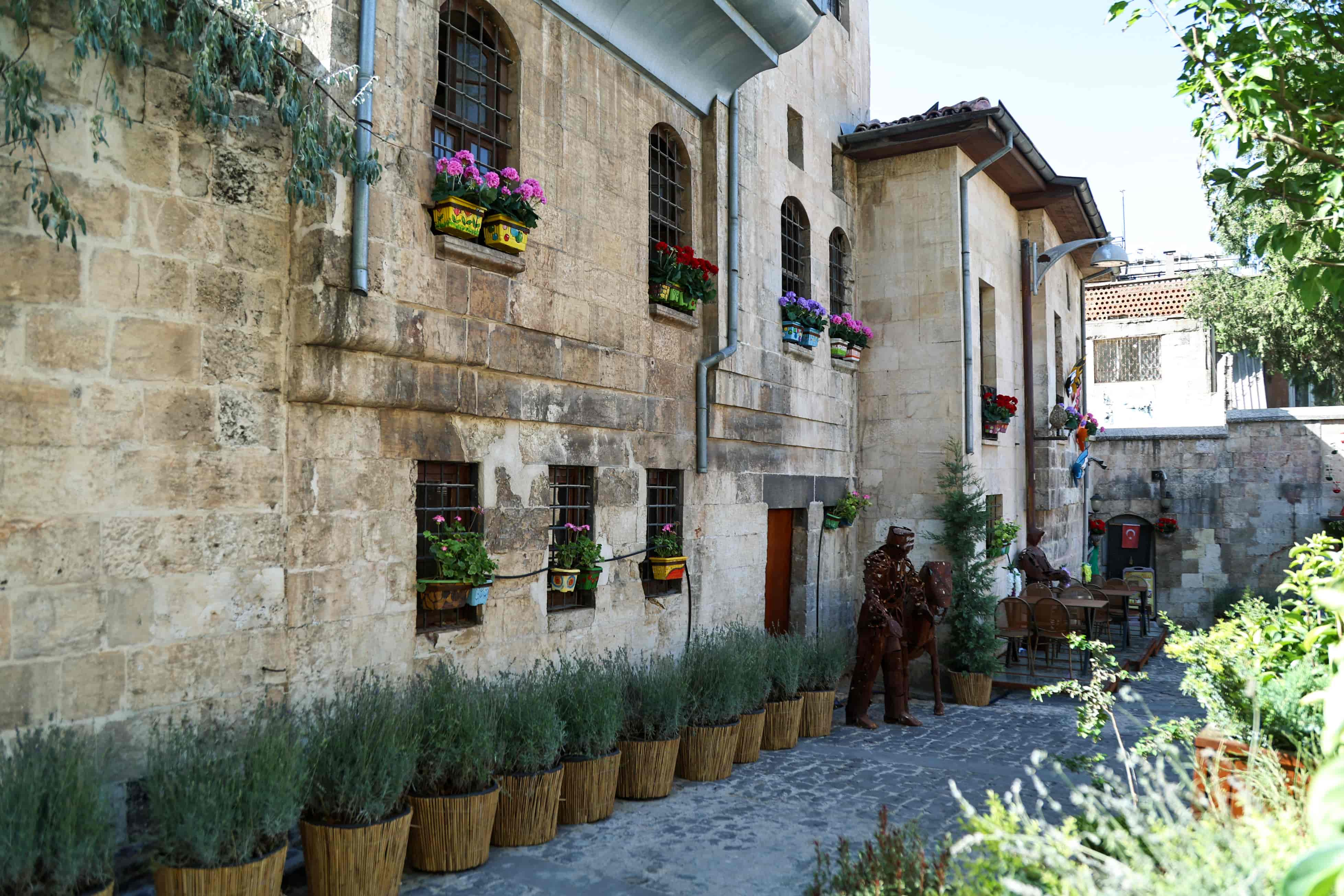
Bey Neighborhood is a neighborhood established in the city center of Gaziantep's Şahinbey district. The neighborhood is often home to historical Antep houses. Most of the historical houses in this neighborhood have been recently restored. Additionally, Mustafa Kemal Atatürk's identity card is registered in Bey Neighborhood.
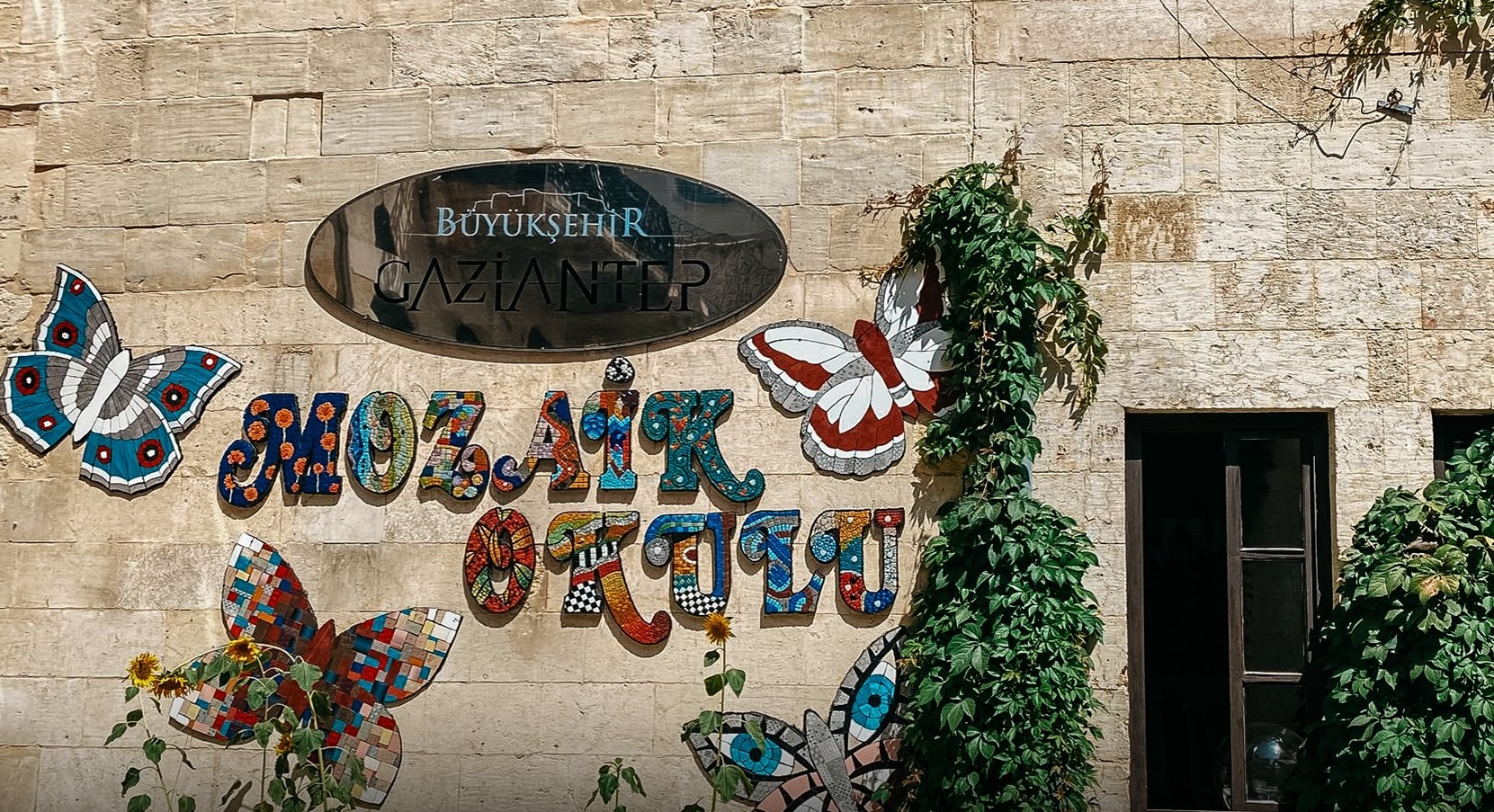
Mosaic workshops are carried out in our centre with professional instructors in order to keep Gaziantep mosaics alive, to carry the Contemporary Mosaic Art forward, and to ensure that it is a branch of art that everyone can reach and learn. The centre, which provides training to trainees in the age of 16 and above, has all kinds of equipment necessary for mosaic art and is the largest and best-equipped mosaic education centre in the city.
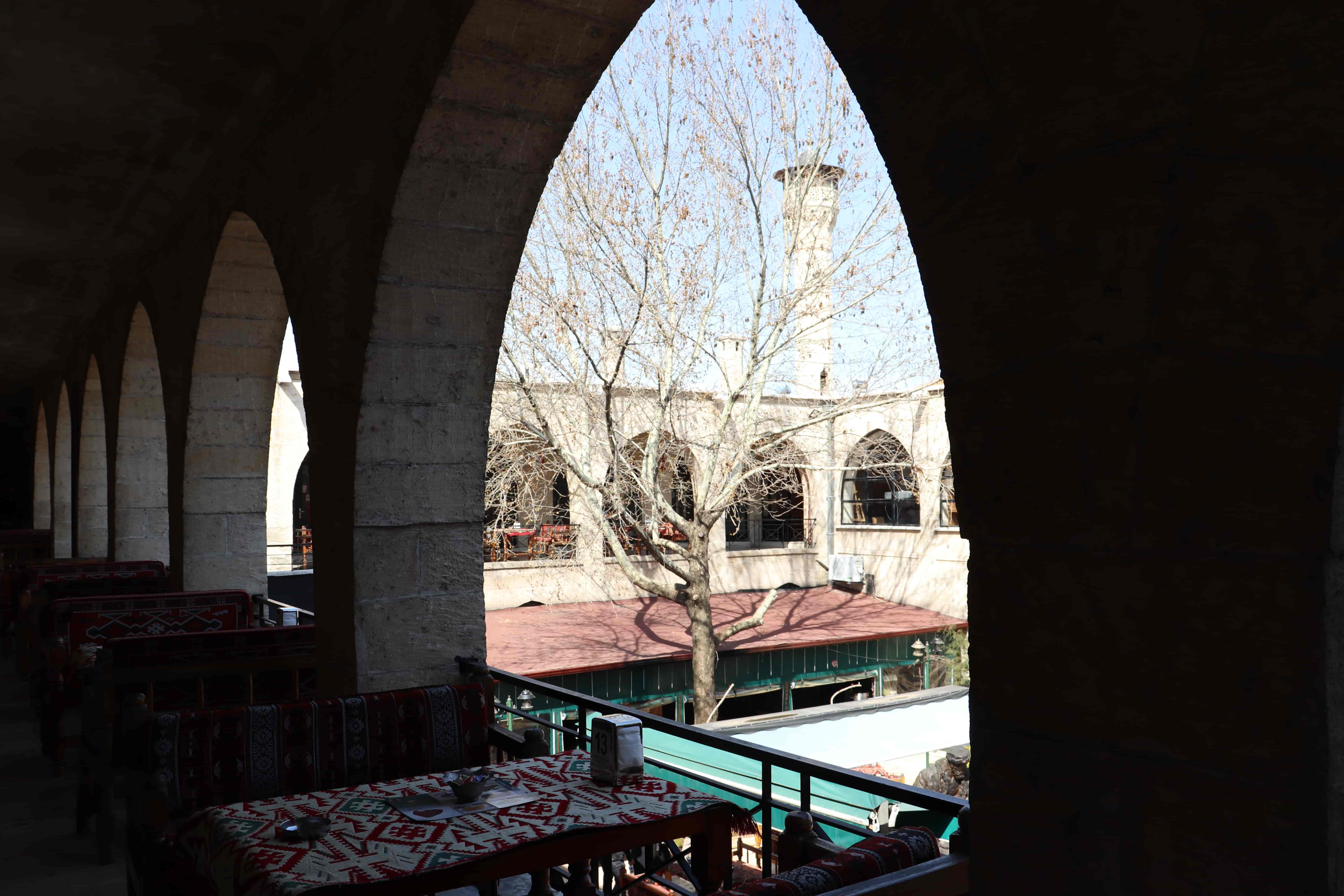
Lala Mustafa Paşa Hanı was built by Lala Mustafa Paşa between 1571 and 1572. Initially constructed as a dark bazaar, it has evolved into its current form over time with various additions. The inn, which has a typical Ottoman caravanserai plan, features stables and merchant rooms on the ground floor surrounding the courtyard, while accommodation rooms are located on the upper floor. Throughout history, the structure has served as a caravanserai, a production and sales site for kutnu fabric, a weapons factory during the defense of Antep, and an olive oil workshop. Today, it functions as a marketplace where traditional handicrafts are preserved. In the courtyard, there is a dervish figure in memory of Ayd-i Baba, who lived here.
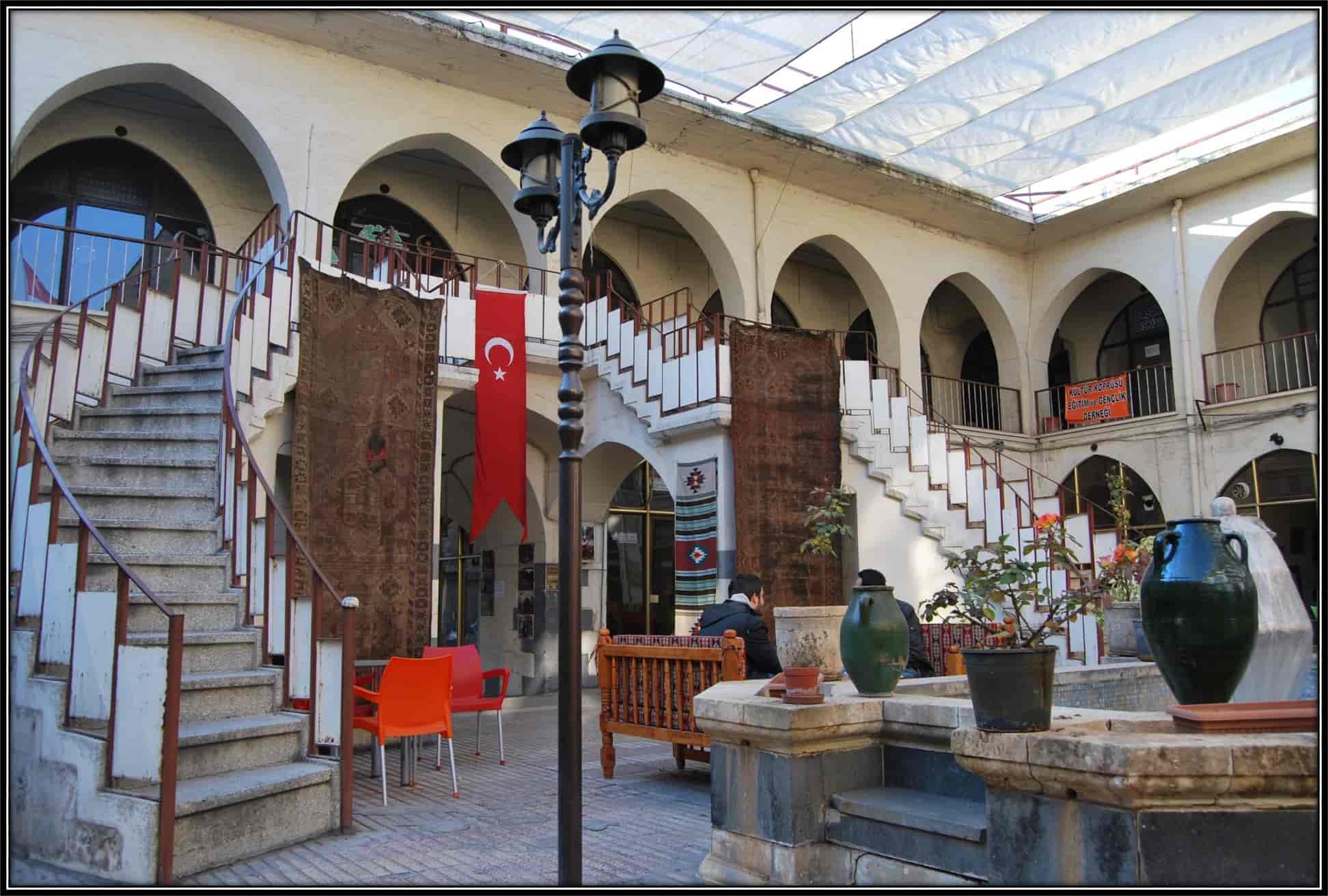
The exact construction date of Yeni Han is not known; however, its mention as 'Han-ı Cedid' in records from 1557 indicates that it was built before this date. The structure, which has a single courtyard and two floors, exhibits typical features of Ottoman caravanserai architecture. The ground floor contains storage and stables, while the upper floor has passenger rooms. The most striking part of the han, which is quite plain in terms of decoration, is the entrance door made of black and white stones on the west facade. The building uses cut stone, and the roofing system consists of vaults and flat roofs.
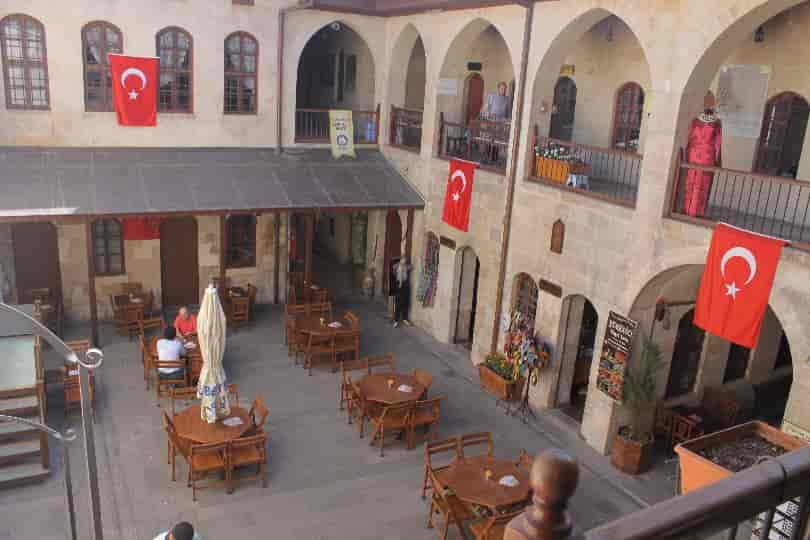
The inn located on Gümrük Street in Şekeroğlu Neighborhood was historically used as a caravanserai. It has been restored by Şahinbey Municipality to serve as a center for promoting and transferring endangered handicrafts to future generations, and has been opened to service as the 'Living Museum Historical Customs Inn'.
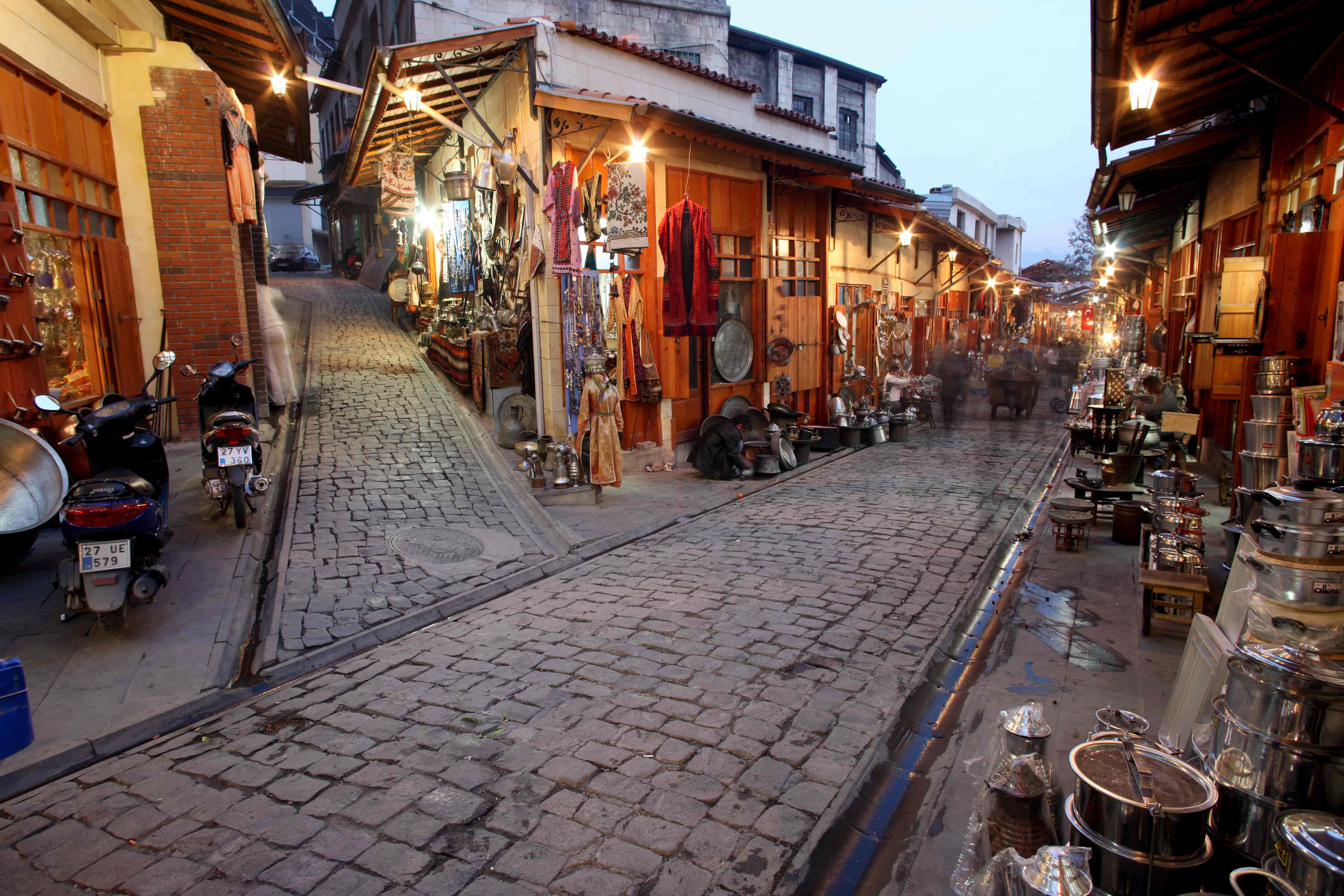
Generally referred to as the Copper Bazaar, it is a complex of bazaars where many artisans produce their crafts. Although the exact construction date of the shops located in the Copper Bazaar is not known, it is believed to have been built in the 16th century. The bazaar consists of single-story shops and is located within the caravanserai district. The art of copperworking, which gives the bazaar its name, continues to thrive intensely today.
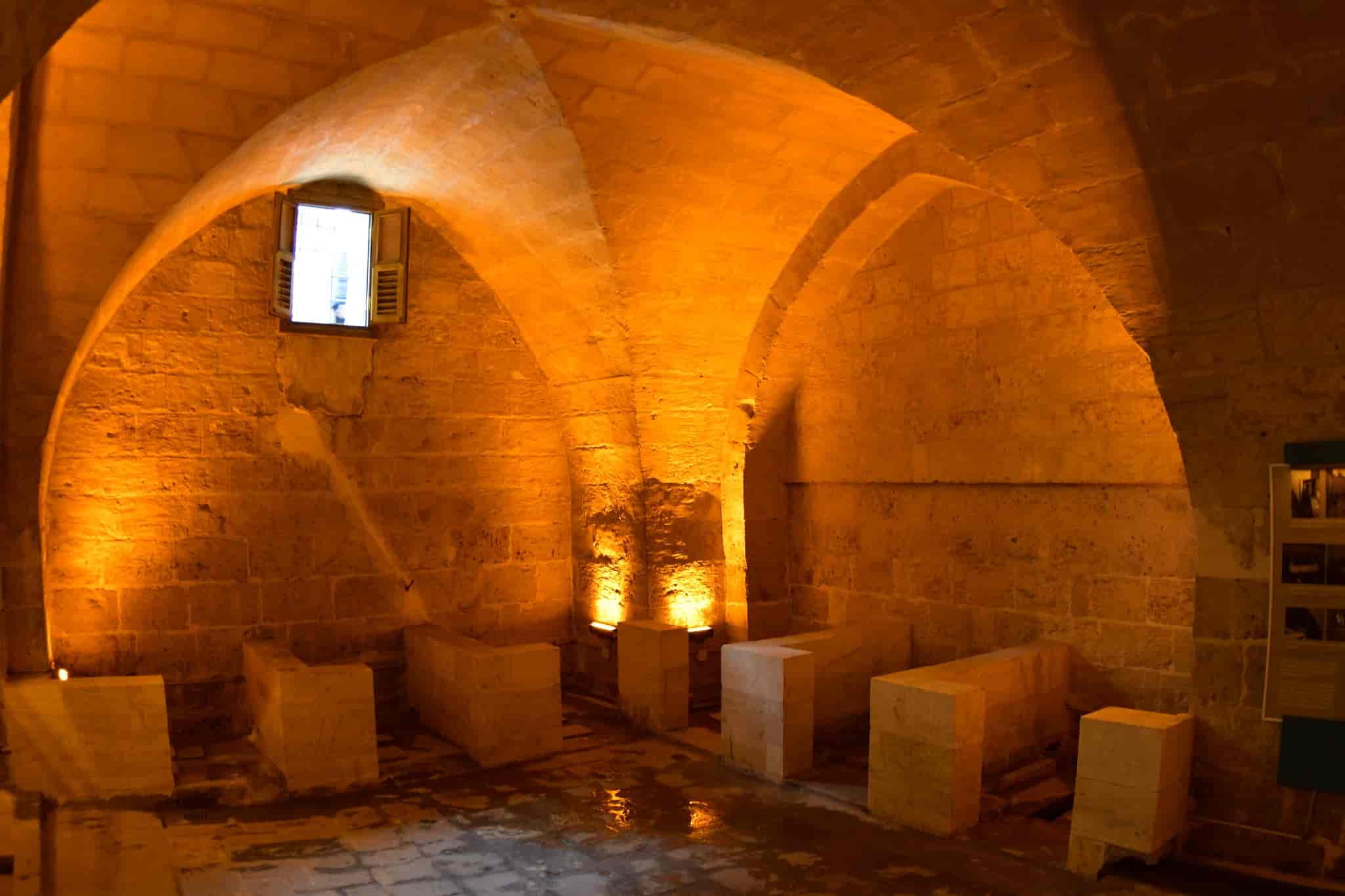
Dating to the 16th century, the kastel was built next to the mosque and it is thought that it was built to meet the water needs of the masjid. During the excavations, water pipes made of terracotta (kunks) and livas, which were used for draining swamps, discharging the water accumulated in a spot, and collecting the underground water, were found.
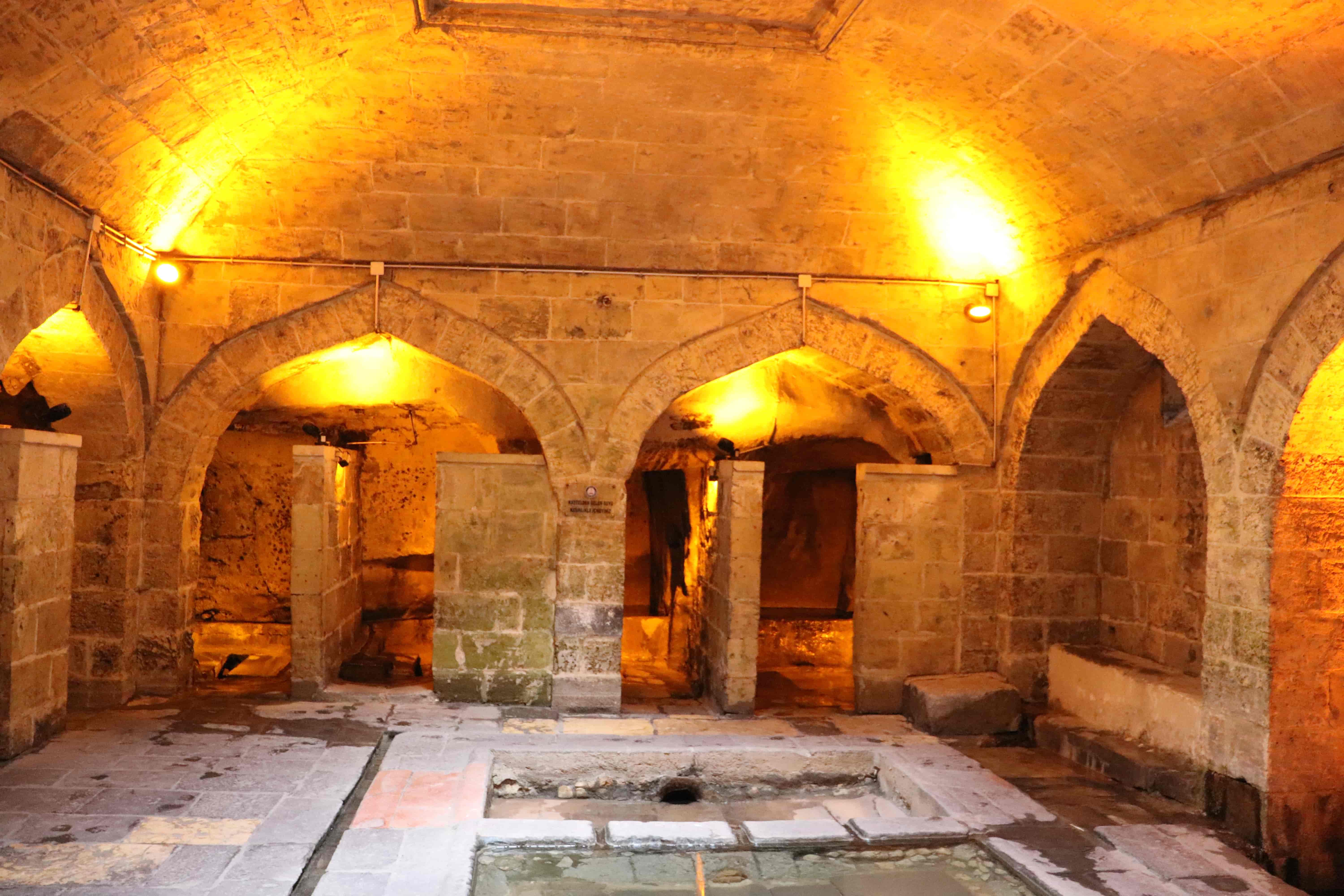
Pişirici Mosque and Castle, considered one of the oldest castles in Gaziantep, is an early example of the city's historical water architecture. Its history is believed to date back to the 13th century. The architectural features include construction with cut stone material and pointed arch arrangements. It served both for water supply and as a social space for public use.